
This article is presented in partnership with Eight Sleep.
Somewhere between motherhood, stress, getting older and what I’m pretty sure might be the beginning of perimenopause, sleep has gotten… complicated.
And by complicated, I mean I can go to bed completely comfortable and wake up a few hours later personally offended by the temperature of my own bedroom.
Covers off.
Covers back on.
One leg out.
Fan on.
Maybe the thermostat needs to come down.
Actually, now I’m cold.
It is a whole production.
And apparently, I am far from the only woman starring in it.
Sleep problems are incredibly common during the menopause transition. Hormonal changes, hot flashes, stress and shifts in the body’s temperature regulation can all make it harder to get the kind of deep, uninterrupted rest many of us already weren’t getting enough of.
That got me thinking: if our bodies are changing, has sleep technology finally started changing with us?
Because if I’m being completely real, I used to think “sleep technology” basically meant wearing a watch to bed so it could wake up before me and announce that I had, once again, done a terrible job sleeping.
Thank you for the information, tiny wrist narc.
But new sleep technology is starting to do something much more interesting.
Instead of simply telling us what happened overnight, some technology is beginning to respond to what our bodies and our environments are doing while we sleep.
That might mean changing the temperature of the bed, adjusting the lighting around us, creating a more consistent sound environment or using digital tools to help change the habits keeping us awake in the first place.
And with Daylight Saving Time ending November 1 this year, this feels like a pretty good time to figure out what all this technology can actually do.

Temperature Might Be the Most Interesting Part of Sleep Tech Right Now
This is the part that immediately got my attention.
Because when your internal thermostat suddenly decides it has its own personality, “just make the room cooler” doesn’t always solve the problem.
Temperature and sleep are closely connected. During perimenopause and menopause, hormonal changes can affect body-temperature regulation while hot flashes and night sweats can make staying asleep a whole lot harder.
So instead of cooling an entire bedroom to one temperature all night, some newer systems are focusing on the actual sleep surface.
And that is where things get interesting.
Eight Sleep Takes That Idea a Step Further
Eight Sleep’s Pod is a smart mattress cover that fits over your existing mattress, so you don’t have to replace your whole bed.
Each side can be heated or cooled independently, anywhere from 55°F to 110°F.
Which, honestly, might be worth discussing for couples based on that sentence alone.
Because sharing a life with somebody does not automatically mean sharing an ideal sleeping temperature.
The Pod also tracks sleep patterns and certain biometrics without requiring you to wear a watch or ring. Its Autopilot technology uses your nightly information to personalize temperature adjustments as you sleep.
That distinction is what caught me.
Most of us are used to sleep trackers telling us what happened after the fact.
You woke up three times.
Your heart rate changed.
Your sleep score was a 62.
Okay…now what?
The idea behind Eight Sleep is different because the technology can respond while you are actually sleeping.
And the company has been putting a particular focus on women’s sleep.
Eight Sleep has studied temperature regulation for women experiencing nighttime hot flashes during perimenopause and menopause.
In a 2026 study conducted by Eight Sleep researchers involving 98 peri- and postmenopausal women, participants reported an average 56% reduction in nighttime hot flashes while sleeping with active temperature regulation turned on.
The full manuscript is currently available as a preprint and has been submitted for peer review, so those findings are promising but should not be treated as settled medical evidence. Individual results can vary.
That distinction matters.
The Pod is not a medical device, and it is not a treatment for menopause.
But the idea behind the technology is fascinating.
Instead of simply documenting that you woke up hot, it is trying to change the environment around you while it is happening.
There is peer-reviewed research looking at temperature-controlled sleep more broadly, too. A 2024 study involving 54 adults found changes in certain sleep-stage measurements along with improvements in nighttime heart-rate and heart-rate-variability measures when participants slept with the Eight Sleep temperature-control system turned on.
Most of the study’s researchers were affiliated with Eight Sleep, which is important context when considering the findings.
For me, though, the bigger story is not one study or one percentage.
It’s the shift from tracking our sleep to technology actually responding to our sleep.
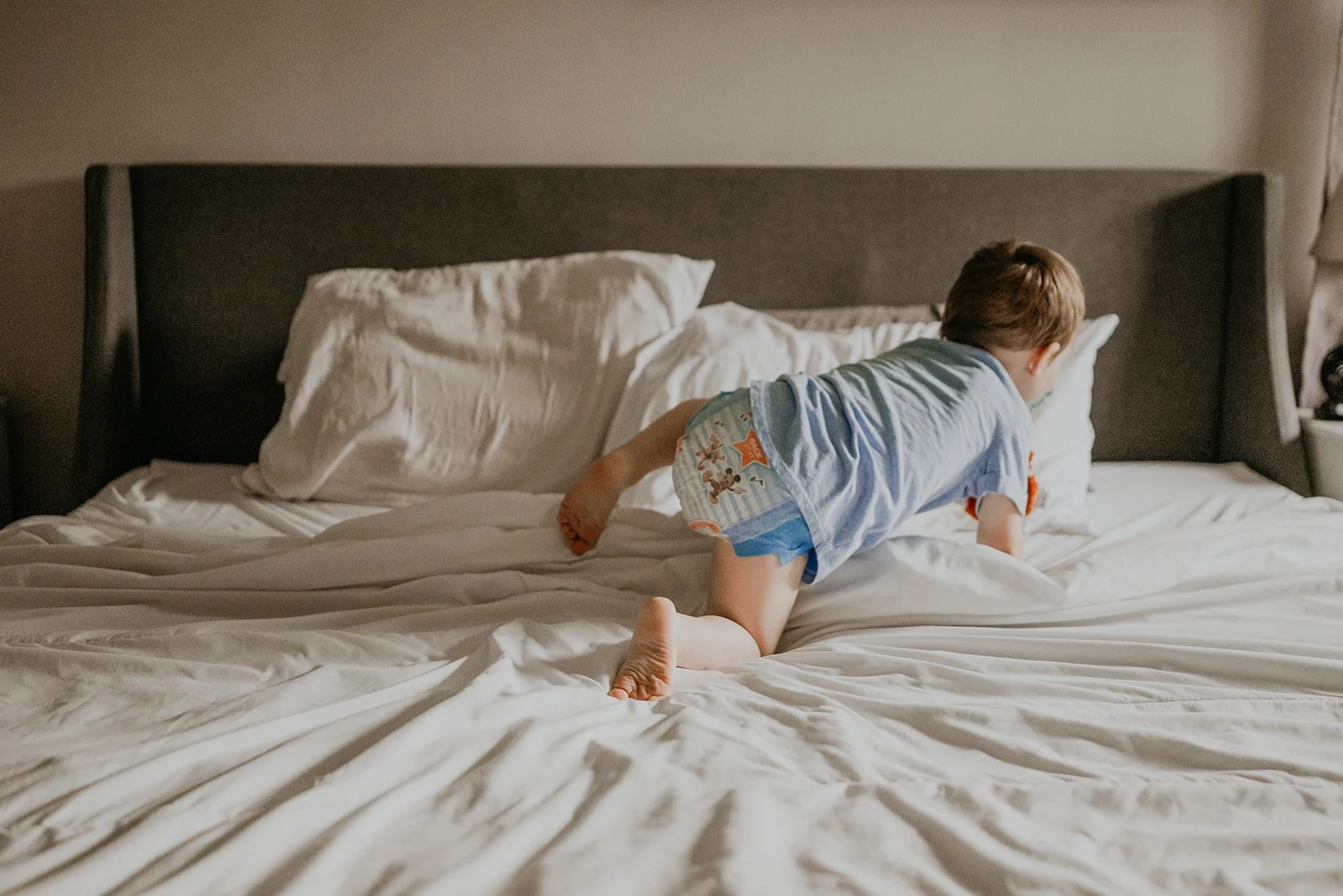
BETTER SLEEP ISN’T JUST FOR GROWN-UPS.
Wearables Are Moving Beyond “Girl, You Slept Badly”
Raise your hand if you have ever woken up feeling perfectly fine, checked your watch and immediately started questioning your entire night.
Apparently I slept terribly?
Interesting, because I was doing okay until you told me.
Wearables can still be useful.
Smartwatches, rings and other devices can help us notice patterns in bedtime, wake time, activity and certain physiological measurements.
But they are not perfect.
The American Academy of Sleep Medicine has cautioned that consumer sleep technology should not be used on its own to diagnose or treat sleep disorders. The information can be useful for spotting patterns and even starting a conversation with a healthcare provider, but your watch is not a sleep lab.
That distinction matters, especially as more of us become obsessed with numbers.
Because knowing you slept badly is one thing.
Knowing what to actually do about it is another.
The more interesting direction for sleep technology is turning all that information into something useful.
Maybe you notice late caffeine keeps showing up on your worst nights.
Maybe your bedtime keeps getting later.
Maybe your room gets warmer at 3 a.m.
Maybe you are exhausted every night but somehow still find yourself scrolling your phone like Instagram personally asked you to stay awake.
Could not be me.
Except yes. Absolutely me.
That is the kind of information I can actually use.
Your Lights Might Be Part of Your Sleep Routine Too
Sleep technology does not have to be something you strap onto your body.
Sometimes it is literally your lightbulb.
Light is one of the major signals our bodies use to regulate circadian rhythm, helping tell us when it is time to be alert and when it is time to wind down.
Which means blasting yourself with the same bright overhead lighting at 10:30 p.m. that you use at 10 in the morning probably is not sending your body a particularly subtle bedtime message.
Smart lighting systems and programmable bulbs can gradually dim or warm as bedtime approaches and slowly brighten a room again in the morning.
Nothing dramatic.
No giant dashboard.
No nightly performance review.
The room simply starts behaving differently when it is time for you to do the same.
Honestly, that might be one of my favorite categories of sleep technology.
The kind that helps without giving me another thing to manage.
Some of the Best Sleep Tech Might Actually Be an App
This one surprised me.
One of the more evidence-backed areas of digital sleep technology is not a fancy bed, wearable or futuristic bedside gadget.
It is digital cognitive behavioral therapy for insomnia, commonly called digital CBT-I.
CBT-I uses behavioral and cognitive strategies to address habits and thought patterns that can contribute to insomnia. Increasingly, those programs can be delivered digitally.
A 2025 analysis of 29 randomized clinical trials involving 9,475 participants found that fully automated digital CBT-I improved insomnia severity compared with control groups, although programs that included therapist support generally performed even better.
I wanted to include this because “new sleep technology” can start sounding expensive very quickly.
And better sleep should not automatically translate into “buy another expensive gadget.”
Some of the most interesting innovation happening in sleep is about making proven behavioral tools easier to access.
That counts as technology too.

TRYING TO MAKE BEDTIME COMFORTABLE FOR EVERYONE?
And Yes, Even Sound Is Getting Smarter
If you are the kind of person who needs a fan running, rain sounds playing or complete silence before you can sleep, you already understand how much sound can affect a bedroom.
Sleep sound technology now ranges from basic white-noise machines to apps, sleep earbuds and devices using different forms of acoustic stimulation.
The research is still developing.
A 2025 review found improvements in some measures of insomnia severity and sleep quality with acoustic stimulation, although not every sleep measure improved.
Translation?
Sound might help some people.
But we are not turning a white-noise machine into a miracle cure.
Sometimes the goal is simply creating a bedroom that feels predictable enough for your brain to finally clock out.
Which, as a mother, feels aspirational in multiple areas of life.
The Best Sleep Technology Might Be the Tech That Does Less
After falling all the way down the sleep-tech rabbit hole, this might be my biggest takeaway.
I do not necessarily need another device telling me I failed at sleeping.
And I definitely do not need another score to obsess over.
The technology that interests me most is the kind that quietly makes my environment work a little better.
Cooling the bed when my body suddenly thinks it is July.
Dimming the lights when the day needs to wind down.
Helping me notice that my “one quick scroll” before bed has somehow become 45 minutes.
Creating consistent sound so every tiny noise does not pull me out of sleep.
And giving me information I can actually do something with instead of simply reminding me that I am tired.
Consumer sleep technology still has limitations. And if you are dealing with persistent insomnia, extreme daytime sleepiness, snoring, breathing problems during sleep or other ongoing concerns, that deserves an actual conversation with a healthcare professional, not just another download from the App Store.
But as I move into this stage of life where motherhood, hormones, work, stress and getting older all seem perfectly comfortable following me into bed, I like where sleep technology is heading.
Because getting older does not mean I automatically have to accept terrible sleep as my new personality.
Maybe the future of better sleep is not collecting more and more data about ourselves.
Maybe it is technology finally learning how to meet our bodies where they are.
About Eight Sleep: The Eight Sleep Pod is a smart mattress cover designed to heat or cool each side of an existing bed independently while tracking sleep and adjusting temperature throughout the night. Use code THECITYMOMS at eightsleep.com/thecitymoms for up to $200 off.
Individual results may vary. The Pod is not a medical device and is not intended to diagnose, treat, cure or prevent any disease. Statements regarding specific outcomes reflect research findings and may not apply to every user. Always consult a healthcare provider with questions about pregnancy, menopause, sleep disorders or other health conditions.